Why “Back to Office” and “Buy Canadian” Are Reshaping Government Furniture Purchasing in 2026

Over the past year, two parallel government priorities have begun to converge in a meaningful way: a renewed push for return-to-office (RTO) and hybrid workplace standards, and a stronger, more formal commitment to Buy Canadian procurement. Together, these shifts are quietly but decisively reshaping how governments across Canada think about office space and, by extension, office furniture made in Canada.
For Canadian manufacturers, dealers, and workplace strategists, this convergence represents more than a policy trend. It signals a structural change in public-sector demand.
The Return to Office Is No Longer Temporary
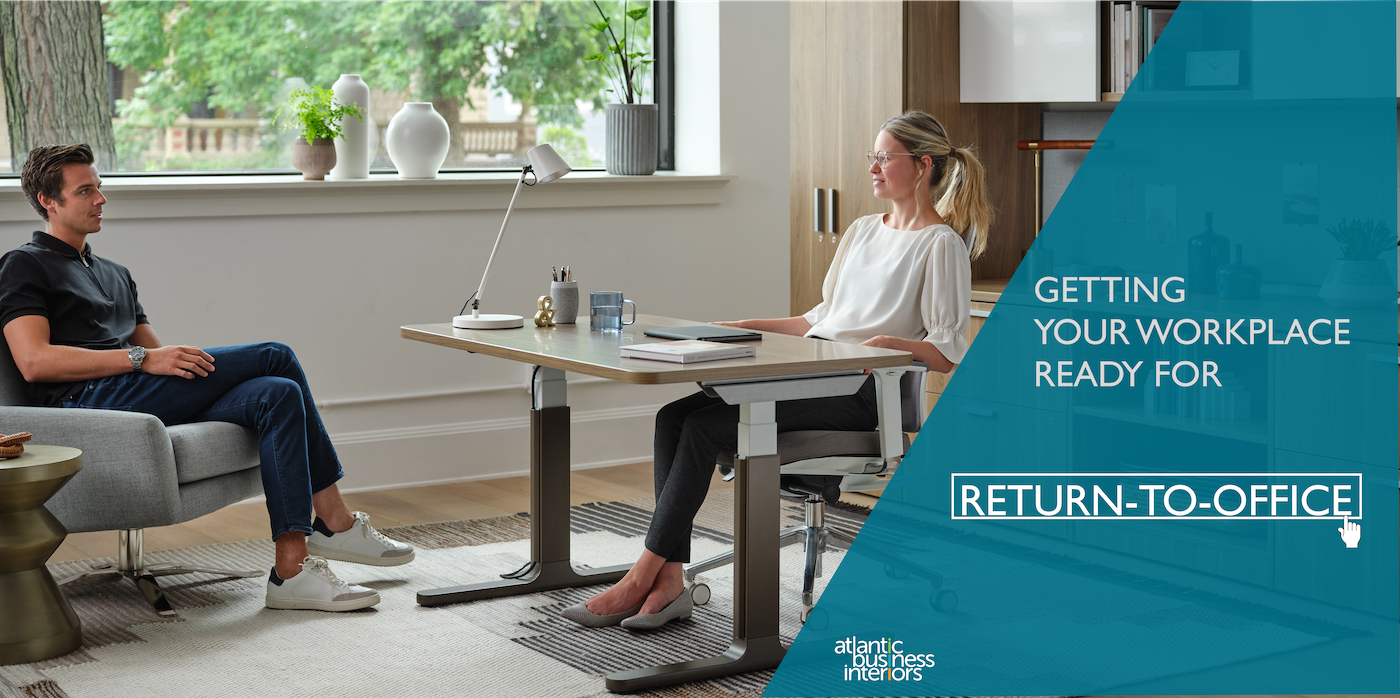
Across federal, provincial, and municipal governments, hybrid work has matured from an emergency response into a standardized operating model. While flexibility remains part of the equation, most public-sector organizations are now requiring employees to spend more consistent time on-site.
This has immediate physical implications for government workplaces:
- Offices must once again support daily occupancy, not just occasional drop-ins
- Collaboration, team-based work, and in-person service delivery are being re-emphasized
- Workspaces designed around hot-desking alone are proving insufficient
“Buy Canadian” Has Moved from Principle to Policy
At the same time, procurement rules are changing. Governments are no longer simply encouraging domestic purchasing; they are actively prioritizing Canadian suppliers and Canadian content in procurement decisions.
This shift is rooted in several realities:
- Supply chain disruptions exposed the risk of overreliance on imports
- Public spending is being viewed as a tool to support Canadian jobs and industry
- Economic resilience and national capability are now strategic objectives
Furniture made in Canada is no longer just a “nice-to-have” in public procurement—it increasingly aligns with evaluation criteria around origin, reliability, lead times, and long-term value.
Sustainability Is the Third Pillar
Layered on top of RTO and Buy Canadian priorities is a third, equally important factor: sustainability.
Governments are under pressure to reduce lifecycle emissions, waste, and replacement cycles. This favors furniture that is:
- Durable and repairable
- Modular rather than disposable
- Supported by local service and parts availability
- Designed for long-term use, not short-term trends
Taken together, these trends are producing a clear outcome:
Government offices are being reactivated, reconfigured, and reinvested in while procurement frameworks increasingly reward Canadian manufacturing and long-term performance.
The conversation is no longer about whether employees will return to the office or whether Buy Canadian matters. Those decisions have largely been made. The real question now is how government workplaces will function over the next decade and who is best positioned to support them.
In that context, office furniture made in Canada is not just relevant. It is increasingly central to how governments deliver on productivity, sustainability, and economic responsibility at the same time.